ProjectsOctober 31, 2026

Water-Monitoring Platform

Water-Monitoring Platform
Simify developed a complete water-monitoring system for a client: the backend, administrative dashboard, device integrations, alerts, deployment and documentation. The delivered system is live and accepted by the client. This case study is anonymised. The illustration uses fictional sensors and readings created for this article; it is an illustrative interface, not a screenshot of the client's dashboard. Client branding, device identifiers, site locations and operational readings are kept private. A water-monitoring workflow needs to connect incoming measurements with the information an operator needs to review them: when the value was measured, which device and organisation it belongs to, whether the device is still reporting and who should receive an alert. That creates work across ingestion, stored history, access controls, charts and notifications. A latest-value display alone does not cover the workflow. The implementation brings those parts together in a shared backend and administrative interface. Simify's founder built the complete system, including:
  • A Python/FastAPI backend with reading history, organisation-scoped records and administrative APIs.
  • A Next.js/TypeScript dashboard with sensor lists, charts and live-update handling.
  • REST, MQTT and LwM2M ingestion paths for device data.
  • Data-quality handling, alert recipients and operational alert checks.
  • Deployment, operating instructions and technical handover documentation.
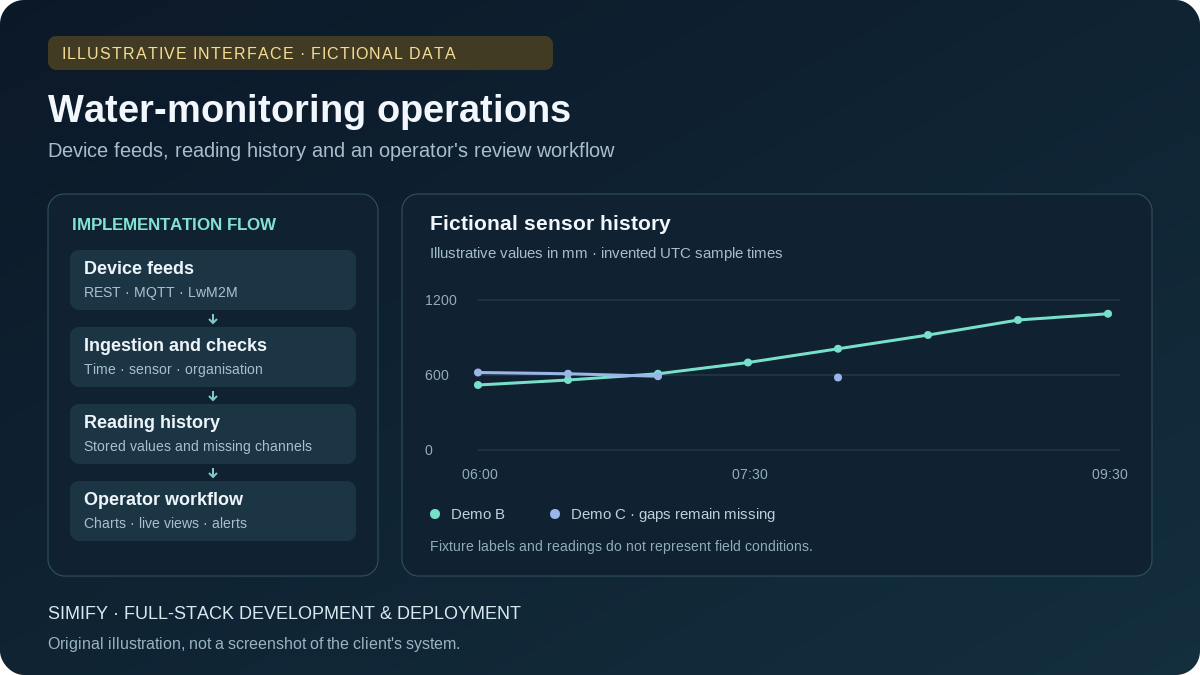
The backend accepts device data through several ingestion paths and normalises it into reading records. Access controls and organisation identifiers connect incoming data to the appropriate sensor and tenant. An integration has to account for the shape and timing of the source data as well as a successful API response. A device may send a batch of historical levels while supplying battery or temperature telemetry only once for the transmission. The parser preserves that distinction so an observation is not copied into times at which it was never measured. The ingestion code distinguishes a repeated reading from information that can be merged into an existing record. For example, a separate message may supply battery telemetry near an existing water-level observation. The merge rules check whether fields are already present and handle conflicting measurement and device-fault information. The goal is to preserve the meaning of a record when messages arrive more than once or through different paths. The reading workflow includes plausibility checks and missing-value handling. An unmeasured channel stays missing rather than becoming an apparent zero or a repeated measurement. These decisions affect what downstream charts, histories and alert checks receive. The fictional illustration deliberately leaves gaps in the sample history instead of drawing an uninterrupted series through missing observations. The administrative application brings together sensor lists, reading charts, organisation and user controls, and live updates. Its connection handling exposes a fallback state when the live connection fails. The backend provides alert-recipient management and checks for water-level and offline conditions. This connects the reading workflow to the people responsible for reviewing an issue. The thresholds and business interpretation belong to the configured operating process; the illustration's status labels are fictional and do not run the client's alert logic. The backend repository includes test cases for parser behaviour, repeated and merged readings, organisation boundaries and operational alerts. The source review for this case study checked those cases; it was not a new execution of the client's full test suite. The handover material covers architecture, APIs, deployment, rollback, backup/recovery procedures and known follow-up work. The implementation also includes leader election for selected background jobs in a multi-instance arrangement. Documentation makes the system's operating responsibilities explicit for future maintenance. This case study does not assert a security certification, measured recovery time or availability guarantee. The result is a live, accepted client system spanning device ingestion, a shared backend, an administrative interface, operational alerts and deployment documentation, delivered end to end by Simify. The results described here concern delivered functionality. Changes in staff time, incident rates, revenue or other commercial outcomes have not been measured for this case study. For an existing application that needs a defined connection, failure handling and operating instructions, explore integrations and application maintenance. Start with a scoped review of the data flow and its dependencies, or send your project details.

Related projects

POOCH In Style Back Office

POOCH In Style Back Office

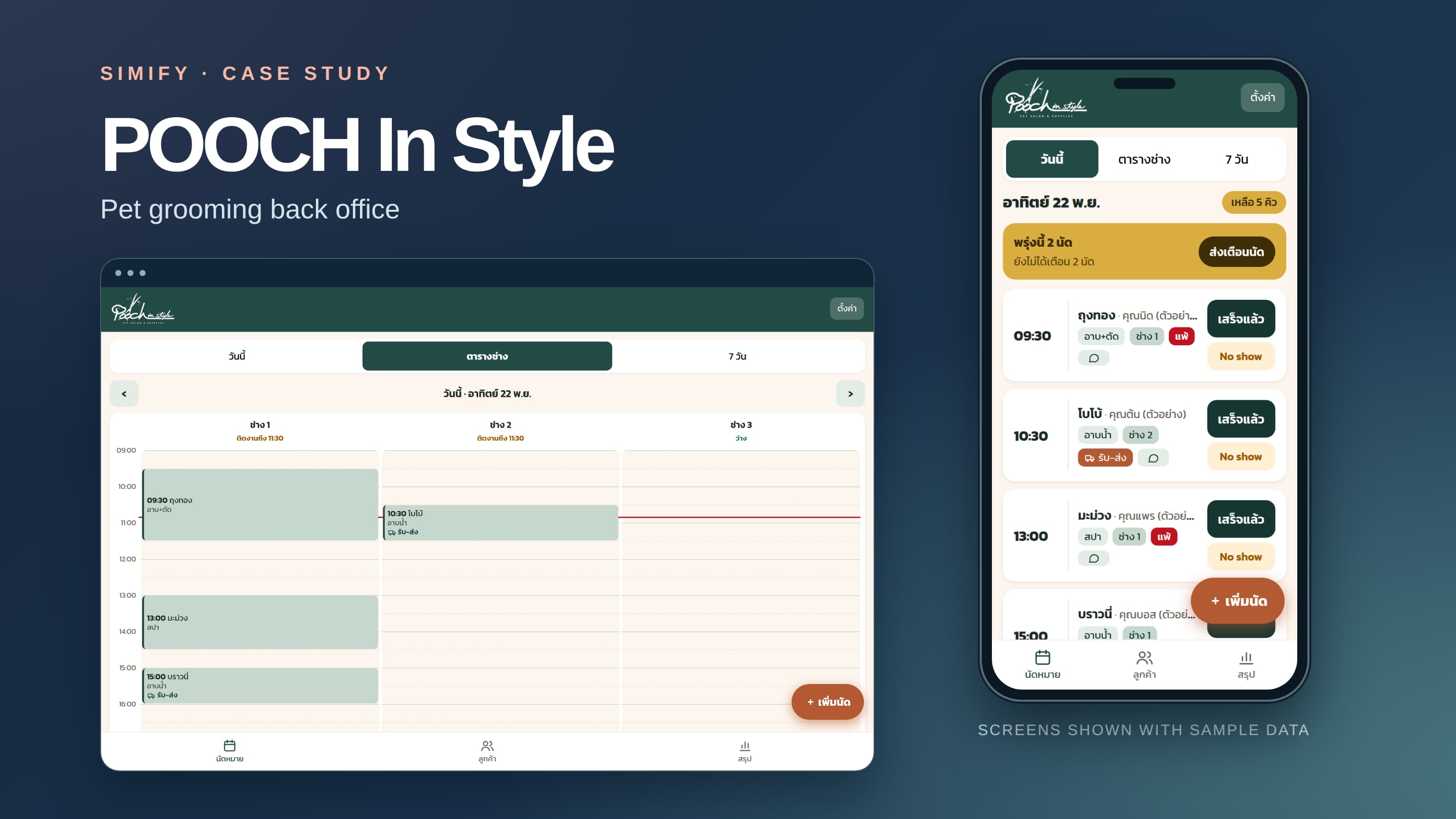
A mobile-first back-office system in use at a pet grooming shop: appointments, groomer schedules, customer and pet records, pickup trips, packages and owner reports.
Paklok Hub

Paklok Hub

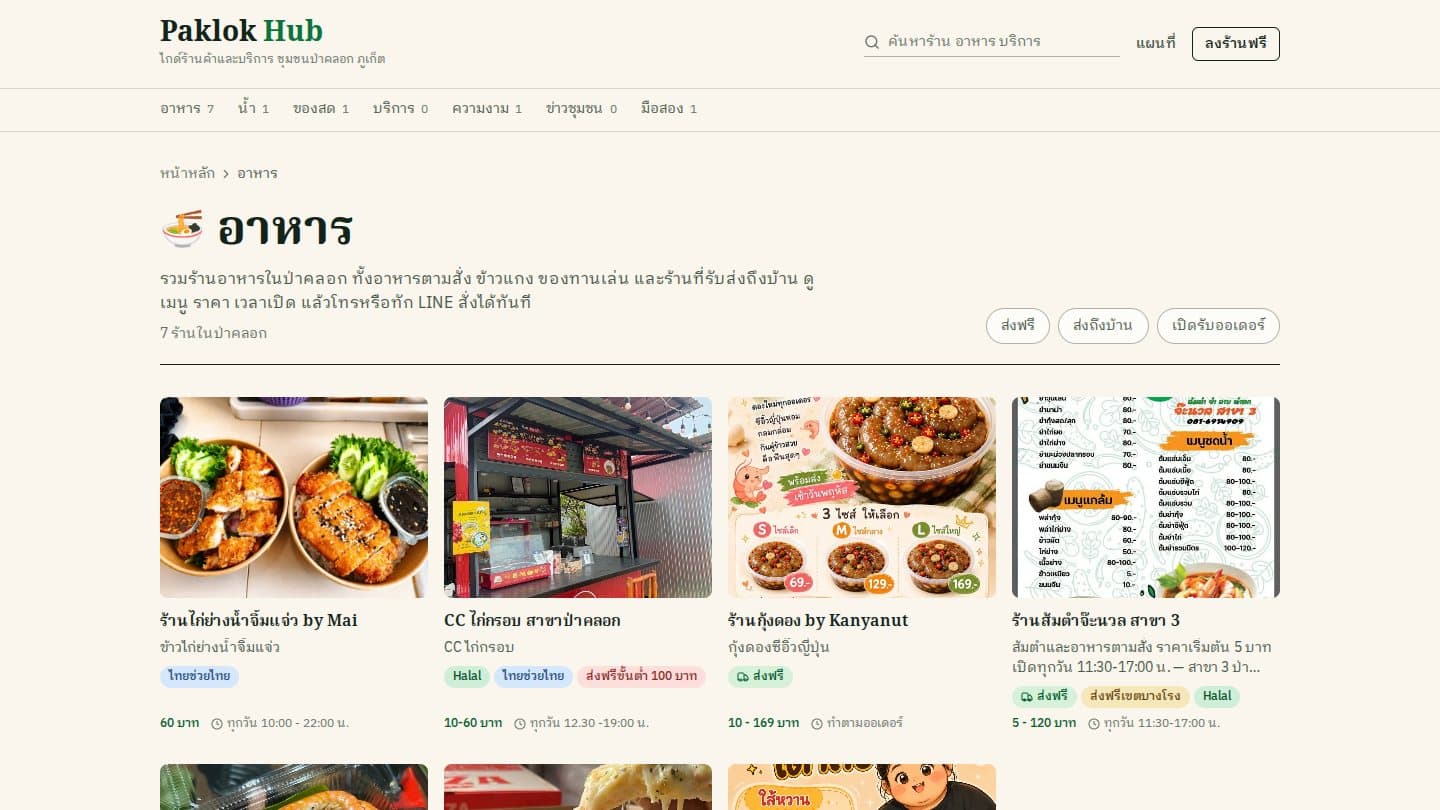
A self-initiated directory of food, shops, and services for Pa Khlok, Phuket. It replaces scrolling through a Facebook group with categories, search, a map, and one-tap contact, and is built, deployed, and run end to end as a community project.
Match Management System

Match Management System

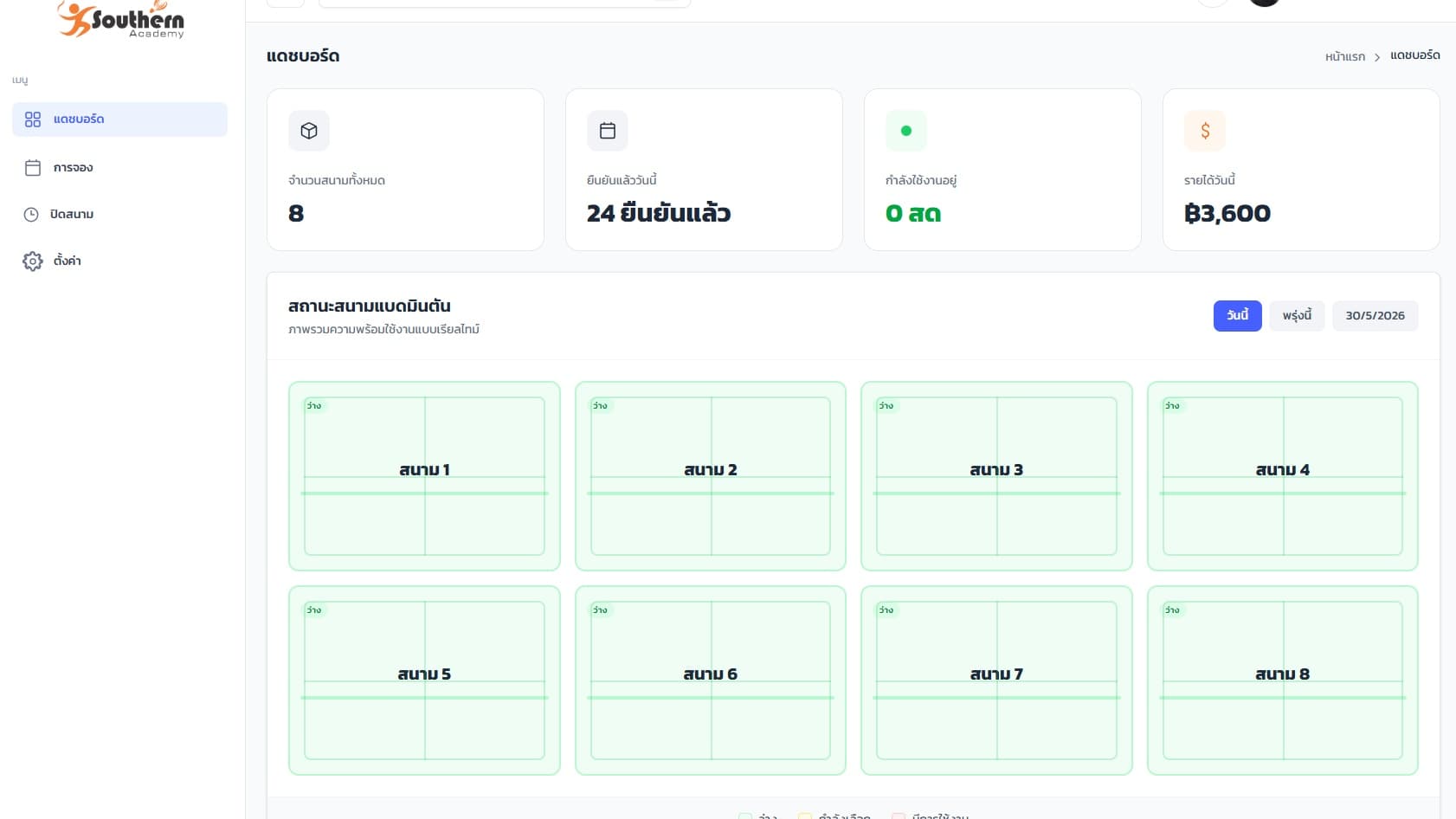
A management system for organizing match schedules, tracking participants, handling approvals, and keeping operations in one place.